
Mouse Secondary Antibodies

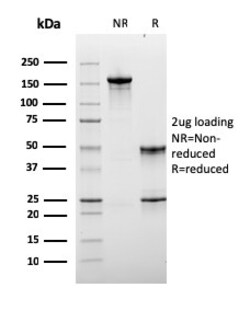
Biotium Lymphocyte Activation Gene 3 (LAG-3) (Negative Checkpoint Regulator)(LAG3/3261), Biotin conjugate, 0.1mg/mL
LAG-3 (also called CD223) is a high affinity MHC class II ligand present on the surface of CD4 CD8 T cells and NK cell, with shared homology in structure to CD4 molecules. It has a glutamic acid-proline (EP) repetitive sequence found in other functionally distinct mammalian, parasitic, and bacterial proteins that may influence a conserved biological function. LAG-3 CD4 CD8 T cells can associate with the T cell receptor (TCR) and downregulate TCR signaling in vitro. LAG-3 inhibits CD4-dependent T cell function via its cytoplasmic domain. LAG-3 Lys-468 within a conserved 'KIEELE' motif is essential for interaction with downstream signaling molecules. Furthermore, as a checkpoint inhibitor target, it may be superior to CTLA-4 and PD-1 since both antibodies only activate effector T-cells, whereas an antagonist LAG-3 antibody can both activate T effector cells (by downregulating the LAG-3 inhibiting signal into pre-activated LAG-3 cells) and inhibit induced (i. e. antigen-speci


Biotium MUC5AC (Mucin 5AC / Gastric Mucin)(9-13M1), CF740 conjugate, 0.1mg/mL
This MAb recognizes the peptide core of gastric mucin M1 (recently identified as Mucin 5AC). Its epitope is located in the N-terminal cysteine rich part of the peptide core of MUC5AC, which is heavily glycosylated. Its epitope is destroyed by beta-mercaptoethanol but not by periodate treatment. MAb 2-11M1 reacts with the protein backbone exclusively; it only reacts with fully deglycosylated MUC5AC. Therefore, the material under test should also be fully deglycosylated. This can be achieved with standard periodate oxidation method. The success of the deglycosylation can be checked with routine PAS (Periodic Acid Shiff) staining. After deglycosylation, the preparation should no longer be stainable with PAS reagent. Only then 2-11M1 will react should MUC5AC be present. This mucin is present in primary ovarian mucinous cancer but usually absent in colorectal adenocarcinoma, thus showing an expression pattern opposite to MUC2. Together with a panel of antibodies, Anti-MUC5AC may b
Biotium AMACR / p504S (Prostate Cancer Marker) (AMACR/2748R), CF680R conjugate, 0.1mg/mL
This antibody recognizes a protein of 42 kDa, which is identified as Alpha-methylacyl-CoA Racemase (AMACR), also known as p504S. It is an enzyme that is involved in bile acid biosynthesis and betbeta-oxidation of branched-chain fatty acids. AMACR is essential in lipid metabolism. It is expressed in cells of premalignant high-grade prostatic intraepithelial neoplasia (HGPIN) and prostate adenocarcinoma. The majority of the carcinoma cells show a distinct granular cytoplasmic staining reaction. AMACR is present at low or undetectable levels in glandular epithelial cells of normal prostate and benign prostatic hyperplasia. A spotty granular cytoplasmic staining is seen in a few cells of the benign glands. AMACR is expressed in normal liver (hepatocytes), kidney (tubular epithelial cells) and gall bladder (epithelial cells). Expression has also been found in lung (bronchial epithelial cells) and colon (colonic surface epithelium). AMACR expression can also be found in hepatocellular c
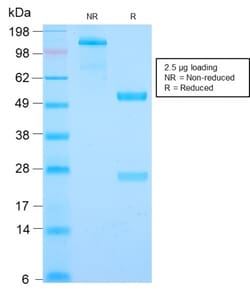
Biotium Cyclin B1 (G2- & M-phase Cyclin)(CCNB1/2978R), CF488A conjugate, 0.1mg/mL
Recognizes a protein of 55-62 kDa, identified as cyclin B1. In mammals, cyclin B associates with inactive p34cdc2, which facilitates phosphorylation of p34cdc2 at aa 14Thr and 15Tyr. This maintains the inactive state until the end of G2-phase. The inactive cyclin B-p34cdc2 complex continues to accumulate in the cytoplasm until the completion of DNA synthesis, when Cdc25, a specific protein phosphatase, dephosphorylates aa 14Thr and 15Tyr of p34cdc2 rendering the complex active at the G2/M boundary. This mitotic kinase complex remains active until the metaphase/anaphase transition when cyclin B is degraded. This degradation process is ubiquitin-dependent and is necessary for the cell to exit mitosis. So, cyclin B-p34cdc2 plays a critical role in G2 to M transition. Primary antibodies are available purified, or with a selection of fluorescent CF Dyes and other labels. CF Dyes offer exceptional brightness and photostability. Note: Conjugates of blue fluorescent dyes like CF4

Biotium Neurofilament (NF-L)(NR-4), CF740 conjugate, 0.1mg/mL
This MAb reacts with a 68 kDa protein, identified as light sub-unit of neurofilaments (NF-L). Neurofilaments make up the main structural elements of axons and dendrites and are found in neurons, peripheral nerves, and sympathetic ganglion cells. Neurofilaments consist of three major subunits with molecular weights of 68 kDa (NF-L), 160 kDa (NF-M) and 200 kDa (NF-H). Anti-neurofilament stains a number of neural, neuroendocrine, and endocrine tumors. Neuromas, ganglioneuromas, gangliogliomas, ganglioneuroblastomas, and neuroblastomas stain positively for anti-neurofilament. Neurofilaments are also present in paragangliomas as well as adrenal and extra-adrenal pheochromocytomas. Carcinoids, neuroendocrine carcinomas of the skin, and oat cell carcinomas of the lung also express neurofilament.Primary antibodies are available purified, or with a selection of fluorescent CF Dyes and other labels. CF Dyes offer exceptional brightness and photostability. Note: Conjugates of blue fl
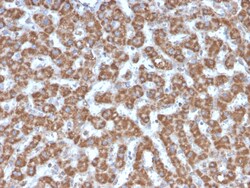
Biotium Prohibitin (Mitochondrial Marker)(PHB/3226), CF568 conjugate, 0.1mg/mL
Recognizes a protein of 30 kDa which is identified as Prohibitin, an evolutionarily conserved protein with homologues found in yeast to man. It is located in the inner membrane of mitochondria. Although prohibitin mRNA and protein expression occurs throughout the cell cycle, maximum levels are detected during the G1/S phase transition and minimum levels are seen in S phase and the G2/mitosis boundary. Prohibitin is located exclusively in the mitochondria with the highest concentration on the inner membrane. Prohibitin is an ideal mitochondrial marker. It shows antiproliferative activity and has been proposed to play a role in normal cell cycle regulation, replicative senescence, cellular immortalization, and tumor suppression. Primary antibodies are available purified, or with a selection of fluorescent CF Dyes and other labels. CF Dyes offer exceptional brightness and photostability. Note: Conjugates of blue fluorescent dyes like CF405S and CF405M are not recommended fo
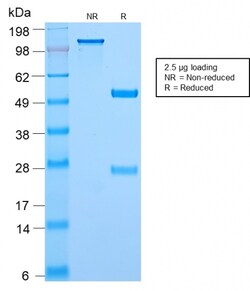
Biotium c-Myc Oncoprotein(MYC2895R), CF488A conjugate, 0.1mg/mL
The epitope of this antibody spans the Myc tag epitope, aa 410-419 (EQKLISEEDL), which is a specific portion of an alpha helical region of human c-myc protein. Because the epitope is located at the dimerization site of the protein, the antibody is not sensitive for detecting endogenous c-myc, making it suitable for detecting Myc tagged proteins or myc overexpression. This MAb shows no cross-reaction with v-myc. c-myc is involved in the control of cell proliferation and differentiation and is amplified and/or overexpressed in a variety of tumors. Over-expression of c-myc protein occurs frequently in luminal cells of prostate intraepithelial neoplasia as well as in most primary carcinomas and metastatic disease.Primary antibodies are available purified, or with a selection of fluorescent CF Dyes and other labels. CF Dyes offer exceptional brightness and photostability. Note: Conjugates of blue fluorescent dyes like CF405S and CF405M are not recommended for detecting lo
Biotium Galectin-13 (GAL13) / Placental Protein 13 (PP13) (PP13/1164), CF488A conjugate, 0.1mg/mL
This antibody recognizes a 32 kDa protein, which is identified as homodimer of galectin-13 (also known as PP13). Galectins are a family of soluble beta-galactoside-binding lectins that modulate cell-to-cell adhesion and cell-to-extracellular matrix (ECM) interactions and play a role in tumor progression, pre-mRNA splicing and apoptosis. One such member, galectin-13, is a 139 amino acid protein that contains one galectin domain. Possessing lysophospholipase activity, galectin-13 exists as a disulfide-linked homodimer. Galectin-13 is suggested to have a developmental role in the placenta and may display immunobiological activity in feto-maternal blood-spaces. Screening for galectin-13 in maternal serum during the first trimester of pregnancy may serve as a diagnostic marker to predict preterm pre-eclampsia.Primary antibodies are available purified, or with a selection of fluorescent CF Dyes and other labels. CF Dyes offer exceptional brightness and photostability. Note: Co
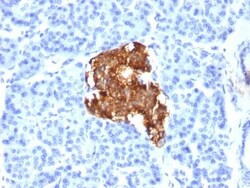
Biotium Insulin(E2-E3), CF740 conjugate, 0.1mg/mL
Recognizes a polypeptide which is identified as insulin, a 51-amino acid polypeptide composed of A and B chains connected through the C-peptide. Proinsulin, which has very little biological activity, is cleaved by proteases within its cell of origin into the insulin molecule and the C-terminal basic residue. Insulin enhances membrane transport of glucose, amino acids, and certain ions. It also promotes glycogen storage, formation of triglycerides, and synthesis of proteins and nucleic acids. Deficiency of insulin results in diabetes mellitus. The main storage site for insulin is the pancreatic islets. Antibodies to insulin are important as beta-cell and insulinoma marker.Primary antibodies are available purified, or with a selection of fluorescent CF Dyes and other labels. CF Dyes offer exceptional brightness and photostability. Note: Conjugates of blue fluorescent dyes like CF405S and CF405M are not recommended for detecting low abundance targets, because blue dyes have
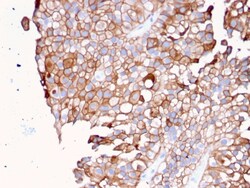
Biotium Uroplakin 1B (Urothelial Differentiation Marker)(UPK1B/3081), Biotin conjugate, 0.1mg/mL
The protein encoded by this gene is a member of the transmembrane 4 superfamily, also known as the tetraspanin family. Most of these members are cell-surface proteins that are characterized by the presence of four hydrophobic domains. The proteins mediate signal transduction events that play a role in the regulation of cell development, activation, growth and motility. This encoded protein is found in the asymmetrical unit membrane (AUM) where it can form a complex with other transmembrane 4 superfamily proteins. It may play a role in normal bladder epithelial physiology, possibly in regulating membrane permeability of superficial umbrella cells or in stabilizing the apical membrane through AUM/cytoskeletal interactions. UPK1B is expressed by terminally differentiated urothelial cells. Primary antibodies are available purified, or with a selection of fluorescent CF Dyes and other labels. CF Dyes offer exceptional brightness and photostability. Note: Conjugates of blue fluo
Biotium ATRX / RAD54 (Alpha Thalassemia Mental Retardation) (ATRX/2900R), 1mg/mL
ATRX is a member of the Snf2 family of helicase/ATPases, which contribute to the remodeling of the nucelosome structure in an ATP-dependent manner, and facilitate the initiation of transcription and replication. Structurally, ATRX contains a PHD zinc finger motif. ATRX is regulated throughout the cell cycle where it is differentially distributed within the nucleus. During interphase, ATRX predominately associates with the nuclear matrix, while during mitosis, ATRX localizes with condensed chromatin. At the onset of M phase, phosphorylation rapidly induces this redistribution of ATRX to the short arms of human acrocentric chromosomes, where it then specifically complexes with heterochromatin protein 1 alpha to mediate chromosomal segregation. Mutations in the ATRX gene correlate with a high incidence of severe X-linked form of syndromal mental retardation associated with alpha-thalassemia or ATRX syndrome. Primary antibodies are available purified, or with a selection of fluorescen
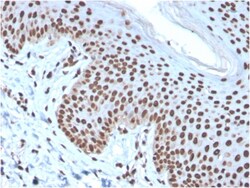
Biotium Histone H1 (Pan Nuclear Marker)(rAE-4), CF740 conjugate, 0.1mg/mL
Please note that this antibody is a recombinant Mouse version of original anti-histone H1 antibody (Clone AE-4). Because the variable heavy (VH) and variable light (VL) domains are the same, recombinant antibody has the same exact reactivity as the original AE-4 MAb. There are several advantages of producing a recombinant version of a monoclonal antibody. For example, a recombinant antibody is a purer preparation of active immunoglobulin with no contaminating non-functional intact Ig or free light/heavy chains. Secondly, antibody can always be produced, even if hybridoma line is lost. Moreover, it adds the flexibility of converting the antibody to any species, isotype or format. Eukaryotic histones are basic and water-soluble nuclear proteins that form hetero-octameric nucleosome particles by wrapping 146 base pairs of DNA in a left-handed super-helical turn sequentially to form chromosomal fiber. Two molecules of each of the four core histones (H2A, H2B, H3, and H4) form the
Genscript Corporation PAPP-A 1AC2 mAb Mouse
Pregnancy-associated plasma protein A (PAPP-A) is a high molecular weight protein htPAPP-A is a protein complex which comprises of two PAPP-A subunits and two proform of eosinophil major basic protein It exists in the blood of pregnant woman dPAPP-A is a htPAPP-A dimmer which is composed of two PAPP-A subunits htPAPP-A serves as a useful marker for the diagnosis of Down syndrome (DS)

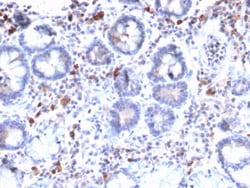
Biotium MUC3 (Mucin 3)(MUC3/2992R), CF488A conjugate, 0.1mg/mL
Recognizes a protein of HMW, identified as mucin 3 glycoprotein (MUC3). Its epitope localizes between aa SITTTE. This MAb shows no cross-reaction with human milk fat globule membranes, MUC1, or MUC2. MUC3 is distributed in colon and rectum, and is also present to a lesser extent in breast, lung and salivary gland tissues. The Mucins are a family of highly glycosylated, secreted proteins with a basic structure consisting of a variable number of tandem repeats (VNTRs) encoded by 60 base pairs (Mucin 1), 69 base pairs (Mucin 2) and 51 base pairs (Mucin 3). The number of repeats is highly polymorphic and varies among different alleles. Mucin 1 proteins are expressed as type I membrane proteins in addition to secreted forms. Mucin 1 is aberrantly expressed in epithelial tumors including breast carcinomas. Mucin 2 coats the epithelia of the intestines and airways and is associated with colonic tumors. Mucin 3 is a major component of various mucus gels and is broadly expressed in no